Patentes en México: lo esencial para todo empresario
March 30, 2026
ASIPONA en México: gestión de puertos y comercio exterior
April 13, 2026
Cyber Diplomacy: Big Tech as New Political Actors
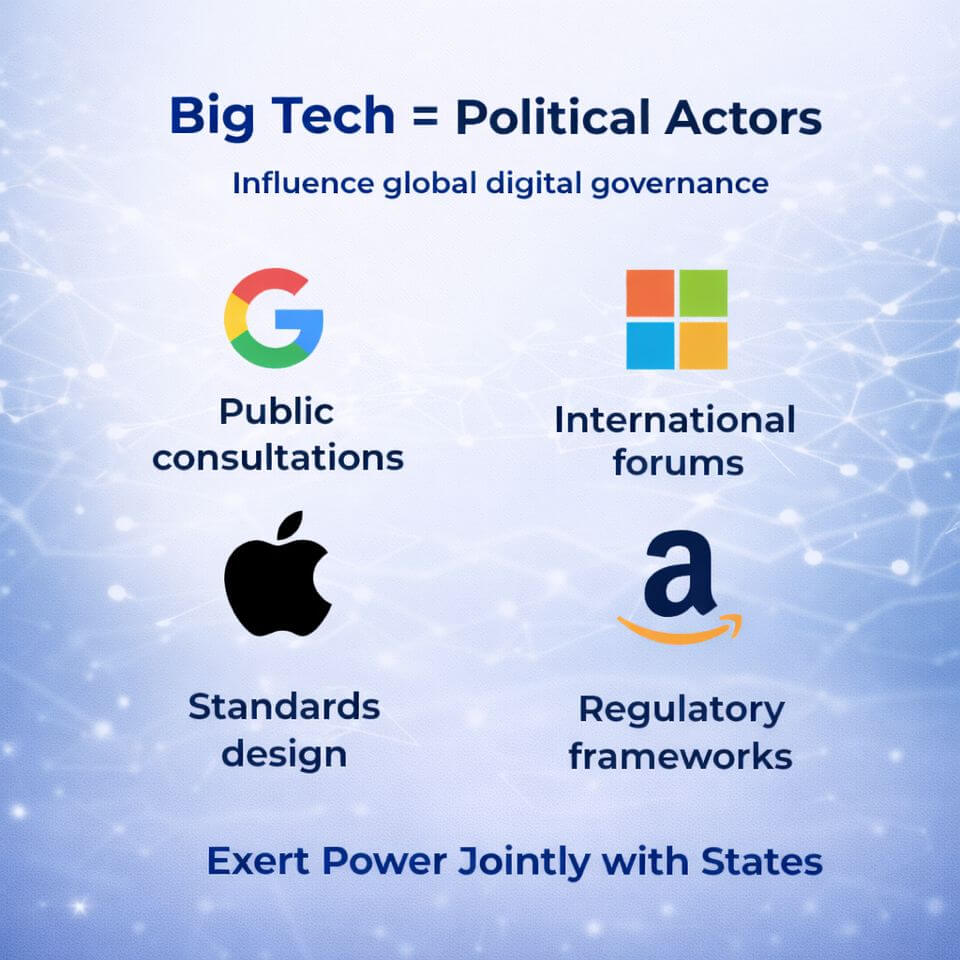
Companies such as Google, Meta, Apple, Microsoft, and Amazon operate as quasi-diplomatic actors that not only comply with regulations but also anticipate them. As a result, they actively participate in:
- Public consultations
- International forums
- Standard setting processes
- The development of regulatory frameworks
A clear example is Microsoft’s direct involvement through its Digital Norms Initiative, which was considered within the framework of the Global Conference on Cyberspace.
Global Cyber Diplomacy: Positions of Technological State Powers
United States Cyber Diplomacy – Innovation and Market

Its policy on cyberspace and new technologies is currently governed by the America AI Action Plan, signed in 2025 by President Donald Trump, which seeks to:
- Facilitate the construction of data centers in the United States.
- Promote the export of AI models, semiconductors, and computing infrastructure.
- Encourage the development of cutting-edge technological models.
Clearly, its objective is to limit China’s progress and ensure American leadership in this field.
Its position in this regard is to eliminate regulations that hinder development, promote freedom of expression and access to open-source tools, and enable testing environments and centers of excellence.
European Union Cyber Diplomacy – Regulation and Rights
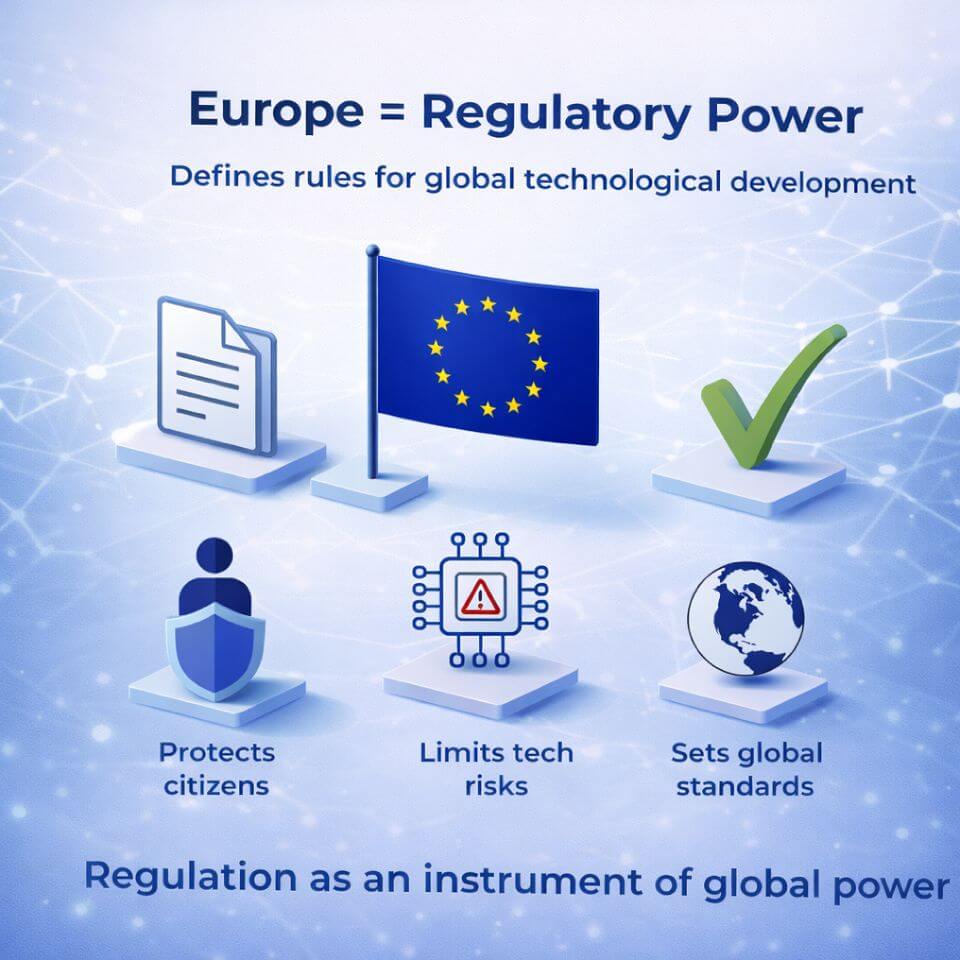
This bloc focuses on data protection, technological regulation, and digital rights. Its cyberspace policy is framed within its Common Foreign and Security Policy (CFSP), and at a regional level it is governed by the Organization for Security and Co-operation in Europe (OSCE).
Learn about the extraterritorial powers of the European Union here.
In this context, the European Union has led:
- The GDPR: the first law in the world that regulates technology.
- Framework Convention on Artificial Intelligence and Human Rights, Democracy and the Rule of Law (2023): the first binding treaty on human rights and AI.
- Artificial Intelligence Act (2023): includes the prohibition of using AI systems that may cause physical or psychological harm, the requirement of transparency in high-risk systems, and the protection of personal data.
A very interesting fact is that through the bloc’s global diplomatic and economic influence, it leads countries outside the region to adopt its regulatory frameworks, a situation known as the Brussels Effect.
China’s Cyber Diplomacy – Control and State Sovereignty
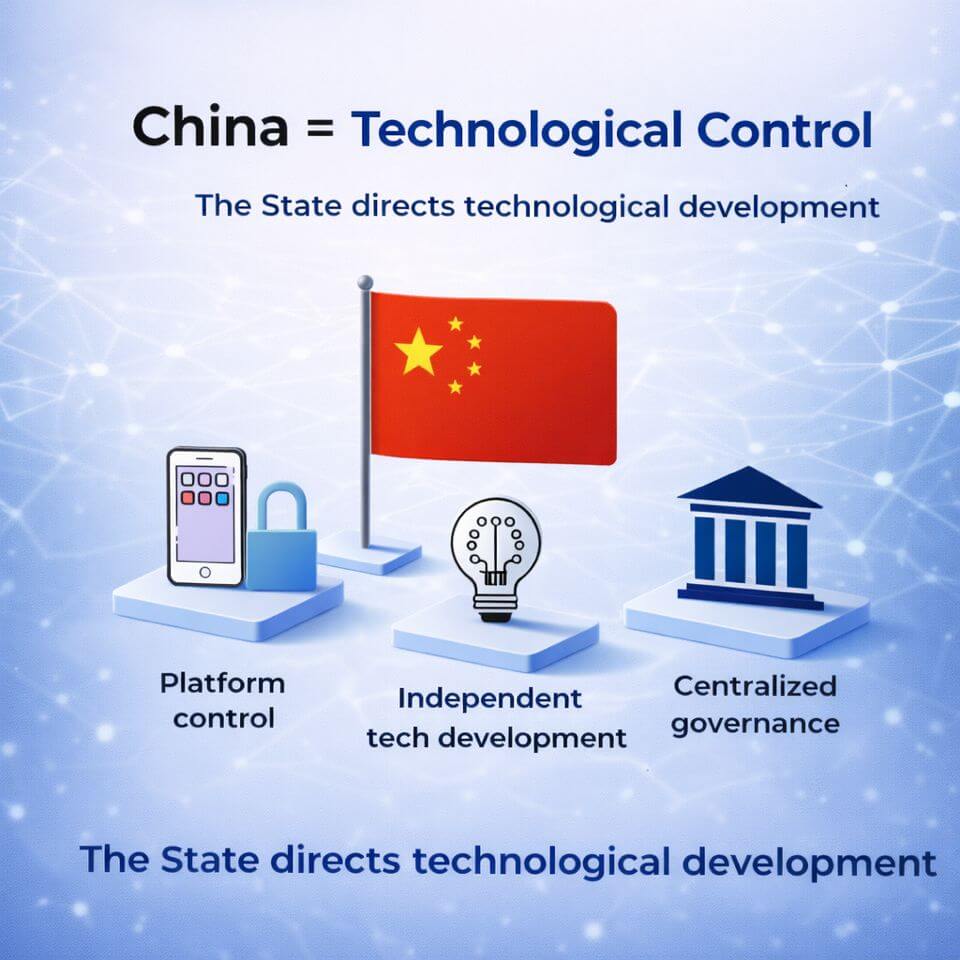
China understands cyberspace as an extension of the State. Under the leadership of its current president, Xi Jinping, it has adopted a stance with the objectives of:
- Limiting the threat that the internet and the free flow of information may pose to internal stability and the legitimacy of the regime.
- Shaping cyberspace to expand Beijing’s political, military, and economic influence.
- Countering the advantages that the United States maintains by increasing China’s influence.
As stated by the World Economic Forum (WEF), the Chinese document Provisions on the Management of Algorithmic Recommendations for Internet Information Services and the National Integrated Circuit Industry Investment Fund reflect a state-centered AI governance model.
Latin America Cyber Diplomacy – Regulate Without Controlling
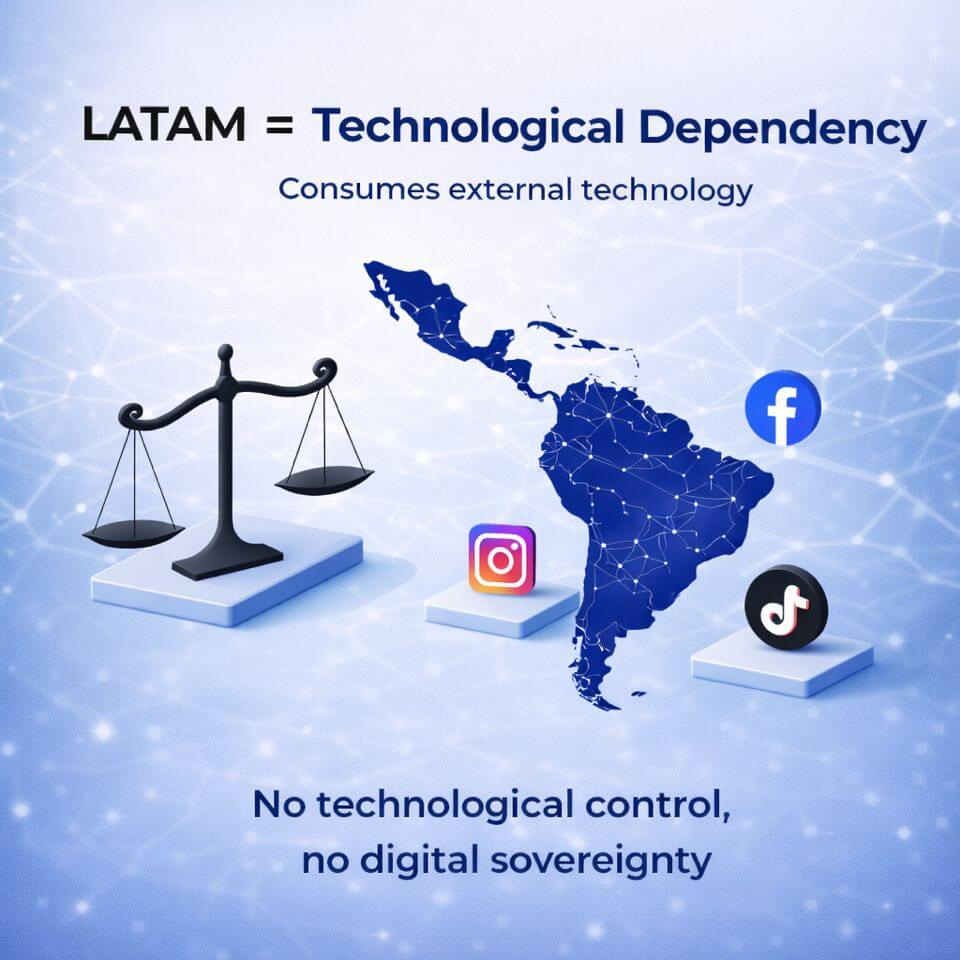
Currently, the region does not develop frontier technology, but it does regulate global platforms. The dilemma is that data is generated in the region but processed outside, since the platforms are not local. However, the laws are local.
Mexico’s Cyber Diplomacy – Digital Gender-Based Violence
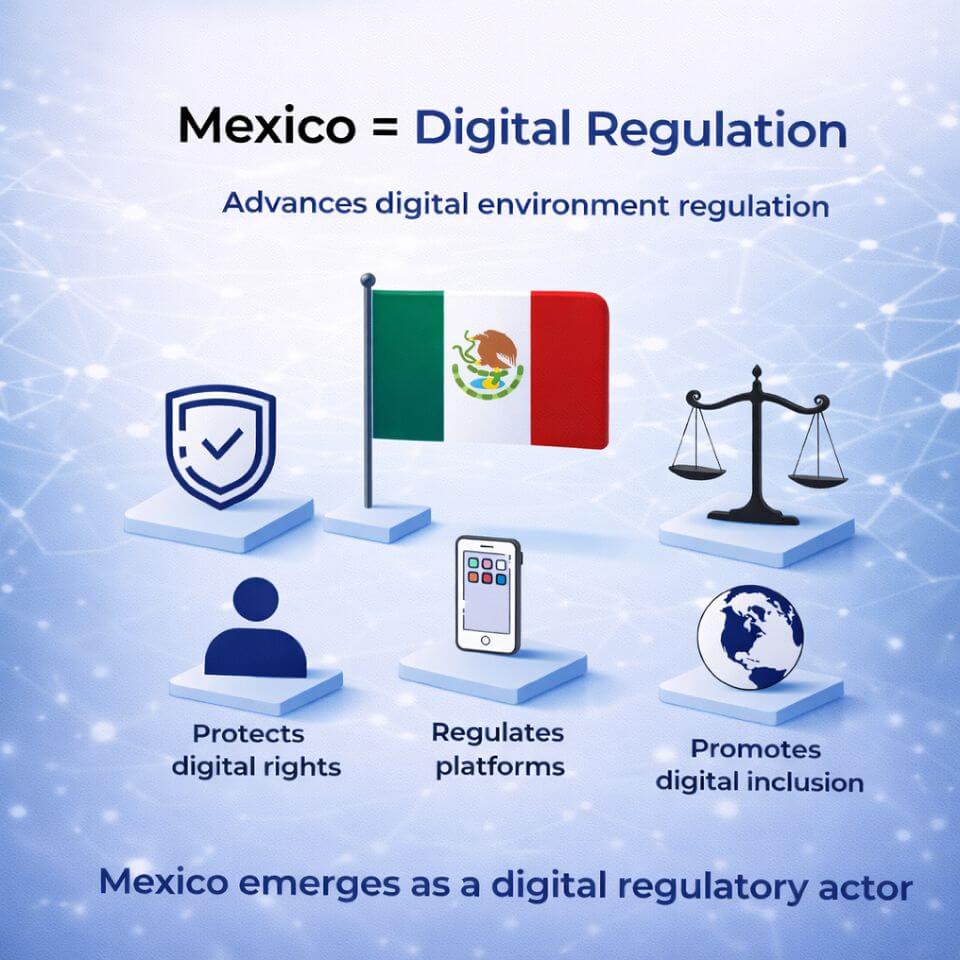
Legislative initiatives and existing laws that shape cyberspace can be observed, such as Mexico’s Olimpia Law, which sets a precedent for regulating digital gender-based violence. Additionally, the first Latin American Summit of Digital Defenders was held here, and an MOU was signed with UN Women and the Latin American Network of Digital Defenders.
Learn here the difference between privacy laws in Mexico and the European Union.